

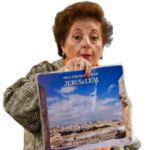

In this comprehensive lecture, Najwa explores the profound intersection of biblical history, geography, and modern identity within the Holy Land. By tracing the lineage of faith from the covenants of Abraham and David to the revolutionary ministry of Jesus, she illustrates how ancient prophecies—such as the “spiritual exodus” and the mission of the Messiah—found their fulfillment in the rugged landscapes of Galilee and Jerusalem.
Najwa provides a deep dive into the historical shifts of the region, detailing the rise and fall of empires, the Jewish Diaspora, and the eventual emergence of Christianity. Central to her message is the concept of “unity in diversity,” where she bridges the gap between various Christian traditions and acknowledges the shared heritage of the Abrahamic faiths.
The discussion takes a poignant turn as Najwa weaves in her own family’s Palestinian Christian heritage, dating back to the 1400s. She provides a raw, firsthand perspective on the 1948 displacement and the contemporary economic and social struggles facing Christian communities in Bethlehem and Jerusalem today. Ultimately, the lecture serves as both a historical masterclass and a heartfelt plea for peace, urging a deeper understanding of the “living stones”—the people—who continue to maintain their faith in a land marked by both divine promise and human conflict.
Quick recap
Najwa delivered an extensive lecture on biblical history and geography, focusing on the Holy Land and its significance in Christianity. She discussed the life and ministry of Jesus, including his birth in Bethlehem, upbringing in Nazareth, and ministry in Galilee and Jerusalem. Najwa explained the historical context of the Jewish people, their dispersion, and eventual return to Israel. She also covered the roles of key biblical figures such as Abraham, Moses, David, and Isaiah. The lecture included detailed descriptions of significant biblical events, prophecies, and their fulfillments. Najwa emphasized the unity and diversity of the Christian faith and highlighted the importance of understanding biblical history to appreciate the depth of God’s plan for humanity.
Summary
Christian Unity and Biblical Context
Najwa discussed the importance of fellowship and connection among Christians from diverse backgrounds, emphasizing the universal nature of the church. She shared insights about the historical and geographical context of Jesus’ ministry in the Holy Land, highlighting the small size of the region and its significance in biblical events. Najwa also explored the historical background of the Jewish people, prophets like Isaiah, and the significance of the Old Testament in understanding the coming of Jesus. She concluded by drawing parallels between the exodus led by Moses and the new exodus brought by Jesus, emphasizing liberation from sin and death.
Jesus’ Mission and Prophetic Fulfillment
Najwa discussed the concept of a spiritual exodus, where receiving Jesus Christ leads to eternal life and freedom from the fear of death, as prophesied in the Talmud. She explained the historical context of Jesus’ life, including his childhood in Nazareth and ministry in Capernaum, and described how Herod’s actions fulfilled an Old Testament prophecy about Rachel weeping for her children. Najwa also explained Jesus’ mission to establish a new creation and spread the kingdom of God, emphasizing that he came to change hearts and establish a rule on Earth through the power of the Holy Spirit.
Jerusalem’s Religious and Cultural Significance
Najwa discussed the biblical story of Jesus’ entry into Jerusalem, highlighting the significance of the word “Hosanna” and the miracle of raising Lazarus from the dead. She explained the historical and religious importance of Jerusalem, including the Dome of the Rock and Mount Moriah, and emphasized the shared beliefs among Jews, Christians, and Muslims regarding Abraham. Najwa also spoke about the concept of “unity in diversity” within Christianity, acknowledging the various ways people worship while maintaining unity through Christ. She concluded by reflecting on the historical dominance of different languages and cultures, using examples from ancient Greece and modern America to illustrate the evolution of global language preferences.
Biblical Themes of Divine Promise
Najwa discussed the biblical stories of Samuel, Hannah, and Isaac, emphasizing the themes of divine prophecy, spiritual transformation, and the contrast between fleshly and promised children. She explained the historical and geographical context of Bethlehem and Ramallah, and highlighted the significance of the firstborn being dedicated to God in Jewish tradition. Najwa also explored the spiritual significance of Isaac as a child of promise, contrasting him with Ishmael, and drew parallels to personal spiritual experiences, emphasizing the transition from living according to the flesh to living according to the Spirit.
David’s Anointing as King
Najwa narrated the biblical story of Samuel anointing Saul as the first king of Israel from the tribe of Benjamin, but Saul later displeased God, leading to Samuel’s search for a new king in Bethlehem. David, a shepherd boy known for his love of God and singing, was chosen by God to be the new king, despite being overlooked by his family. David’s story includes his famous victory over Goliath and his commitment to building a temple for God, with instructions to consult a man named Ornan the Jebusite.
Separation and Salvation in the Bible
Najwa discussed the biblical story of King David and the various people under his rule, including the Jebusites, Ammonites, and Philistines. She explained the significance of a threshing floor, which is used to separate wheat from chaff using wind and a metal blade. Najwa connected this concept to the Gospel of John, where John the Baptist is described as using a winnowing fork to prepare the way for Jesus, who will separate the righteous from the wicked in the last judgment. She also explained the story of Nicodemus, who sought Jesus at night to understand his teachings, and Jesus’ explanation of being born again and the Holy Spirit as the unseen wind that separates the righteous from the wicked.
Nicodemus and Jesus’ Teachings
Najwa discussed the biblical story of Nicodemus, a Pharisee ruler who met Jesus at night to understand his teachings. Jesus explained the need for spiritual rebirth, comparing it to being born of water and the Spirit, which represents baptism and the Holy Spirit. Najwa emphasized the importance of this spiritual transformation and the compassion of Jesus, illustrated through stories like the woman with the bleeding. She also touched on the prophecies fulfilled in Jesus’ death and burial, and mentioned the Gospel of John’s focus on one-on-one conversations with Jesus.
Jewish History and Exile Stories
Najwa discussed the history of the Jewish people, focusing on their interactions with various empires and the role of key figures like Hezekiah, Isaiah, and Cyrus the Great. She explained how the Assyrians took the 12 tribes into exile in 722 BC, but Jerusalem was protected due to Hezekiah’s prayers. The Babylonians later conquered Jerusalem in 586 BC, leading to the destruction of the temple and the captivity of the people. Najwa also covered the story of Daniel and the three young men during this time. She concluded by describing the Exodus, the 40-year journey through the desert, and Joshua’s leadership in entering the promised land.
Israel’s Mission and Christian Heritage
Najwa discussed the historical role of the children of Israel in spreading the knowledge of God to the nations, highlighting their failure to fulfill this mission despite their cultural and philosophical contributions. She emphasized the fulfillment of prophecies through the spread of Christianity, noting the diversity of worshipers in Jerusalem and the significance of the Holy Land to people of various faiths. Najwa also shared her family’s long-standing Christian heritage, tracing it back to the 1400s and mentioning her ancestors’ roles as priests in various locations in the Holy Land.
John the Baptist’s Mission and Gospel Spread
Najwa discussed the significance of John the Baptist’s mission and the reasons why Jews did not accept Jesus, explaining that God’s plan was for the gospel to spread to all nations before returning to Jerusalem. She explained that if the Jews had accepted Jesus, he would have remained within Jewish tradition, but instead, he was handed over to the Gentiles, who crucified him outside the city walls. Najwa also described St. Paul’s conversion on the road to Damascus, highlighting his background as a Roman citizen and Pharisee, and his subsequent role in spreading the gospel to the Gentiles despite facing rejection from the Jews.
Early Christian History and Beliefs
Najwa shared her personal journey and knowledge of early Christian history, discussing how Apostle Paul spread the gospel and established churches, eventually being imprisoned in Rome where he converted the household of Caesar. She described how Apostle John, who lived to 110 years, wrote the Book of Revelation while exiled on the island of Patmos, and reflected on how her own upbringing in Jerusalem prepared her for her current role, despite initially taking the historical significance of the city for granted. The discussion concluded with Najwa expressing her desire to learn more about the Lord and sharing her thoughts on Jewish beliefs regarding the afterlife, noting that while some Jewish groups believed in resurrection, others like the Sadducees did not.
Palestinian Christian Plight in Israel
Najwa discussed the complex situation in Israel and Palestine, highlighting the plight of Palestinian Christians who are facing economic hardship and displacement due to Israeli policies. She shared stories of Christian communities in Bethlehem and Jerusalem struggling to maintain their livelihoods and homes, as well as the efforts of some individuals to support these communities. Najwa also touched on the historical and religious significance of the region, emphasizing the importance of understanding the broader context of the conflict.
Palestinian History and Hope
Najwa discussed the historical and religious significance of the Holy Land, emphasizing its connection to various faiths and the concept of divine punishment for sins. She traced the history of the land from biblical times through various invasions and the destruction of the Second Temple in 70 AD, which led to the area being referred to as Palestine until 1948. Najwa shared her personal story of growing up in Jaffa during the British Mandate and the subsequent conflict in 1948, which resulted in her family’s displacement. She highlighted the betrayal of Palestinians by neighboring countries and the ongoing challenges faced by Palestinians in the West Bank and Gaza, expressing hope for peace and understanding in the region.