
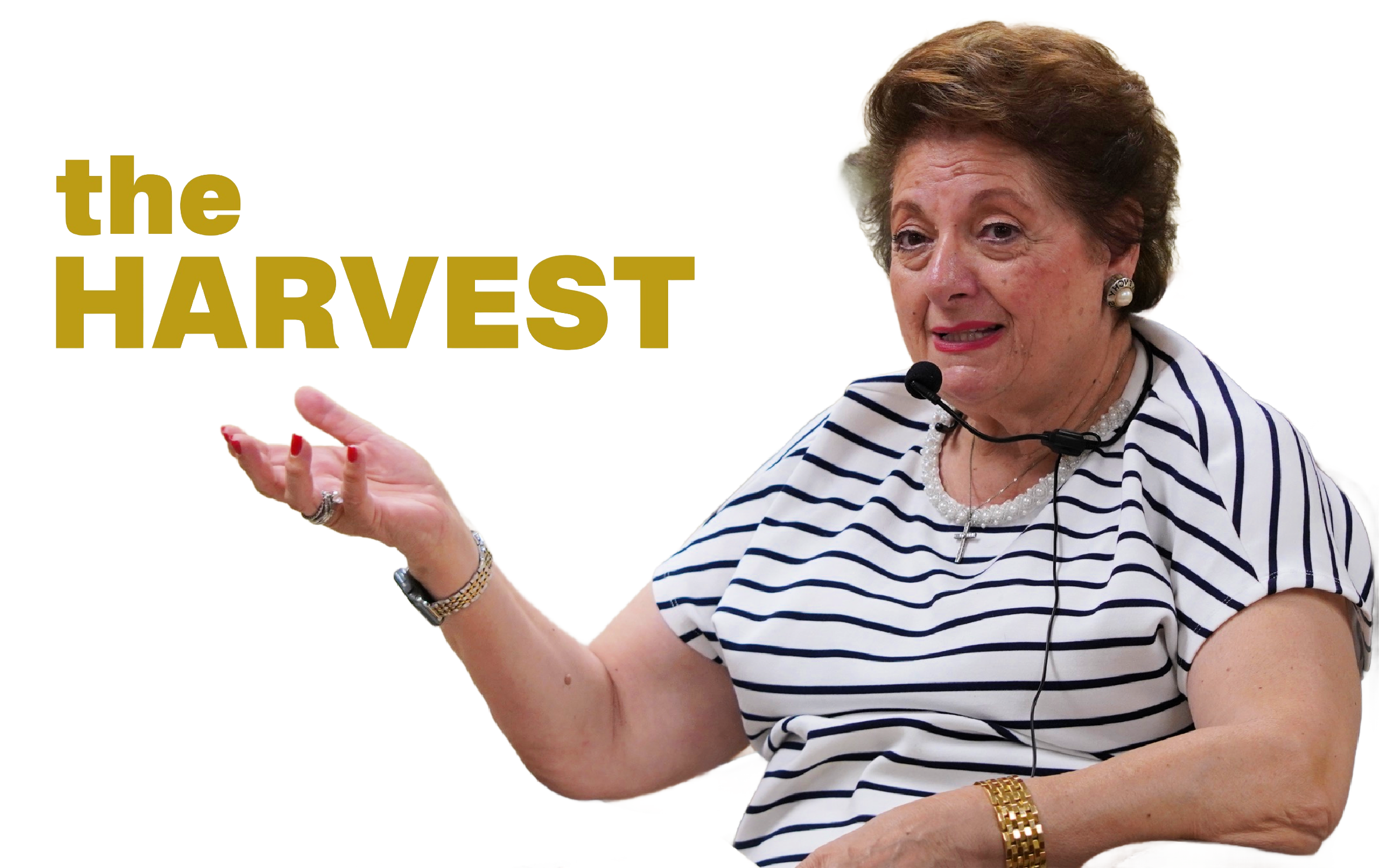


In this episode of The Harvest, Najwa delivers a passionate and scripture-rich exploration of God’s redemptive plan for humanity, focusing on Abraham’s covenant as the foundation for salvation through Jesus Christ. Speaking to a live audience in Birmingham, AL, Najwa weaves together biblical narratives—from Adam and Eve’s fall to Abraham’s call, the Exodus, and Christ’s crucifixion—to illustrate God’s eternal promise to restore humanity to His image and likeness. Emphasizing faith over the law, she highlights Abraham’s righteousness through belief and Jesus as the fulfillment of God’s covenant, urging listeners to claim their spiritual inheritance, commune intimately with God, and trust in His provision. The episode, infused with personal stories and heartfelt prayers, inspires believers to live as a “holy nation” and rely on the Holy Spirit’s power, culminating in a call for spiritual renewal and communal fellowship.
In this episode
The episode begins with Najwa warmly greeting her live audience, acknowledging newcomers like Tony and Maureen, and fostering a sense of community by inviting prayer requests to be shared with her daily prayer group, which includes women from Lebanese backgrounds praying in Arabic, French, and English. She opens with a heartfelt prayer, invoking the Father, Son, and Holy Spirit, asking for the Holy Spirit to open listeners’ hearts to God’s truth and thanking Jesus for His sacrifice that grants everlasting life. This sets the tone for a deeply spiritual session centered on God’s redemptive plan.
Najwa’s central focus is Abraham, whose call from Ur of Chaldea (modern-day Iraq) to follow God marks the beginning of a divine covenant that shapes salvation history. She traces Abraham’s journey through Haran to Canaan, emphasizing his faith in God’s promise to make him the “father of many nations” despite his and Sarah’s old age. Quoting Genesis 17, she highlights God’s renaming of Abram to Abraham and Sarai to Sarah, noting the addition of the letter “H” as symbolizing the “breath of God” or the Holy Spirit, signifying their transformation and inclusion in God’s plan. Abraham’s belief, reckoned as righteousness (Galatians 3:6), becomes a model for listeners, as Najwa underscores that faith, not works, justifies believers.
Expanding on this, Najwa connects Abraham’s covenant to the broader narrative of human redemption. She recounts the fall of Adam and Eve, whose disobedience introduced shame and sin, requiring God to cover their nakedness with animal skins—a precursor to sacrificial atonement. This shame, she argues, persists in humanity’s fallen nature, but God’s plan, established before time, restores humanity to His image through Jesus Christ, the “second Adam.” Najwa vividly describes how Jesus, fully God and fully man, took on human flesh to bear the shame and curse of sin on the cross, nailing humanity’s sins to the “tree” (Galatians 3:13) and restoring access to the Tree of Life, which was guarded after the fall (Genesis 3).
Najwa bridges the Old and New Testaments by tracing God’s covenant through key figures: from Abraham to Moses, who received the Ten Commandments but could not enter the Promised Land, to Joshua (whose name means “Jesus” or “Jehovah’s salvation”), who led Israel into Canaan, prefiguring Christ’s role in leading believers to eternal life. She explains that the law, given to teach Israel God’s ways, could not justify humanity due to persistent disobedience, as Paul notes in Galatians 3. Instead, Jesus, the singular “offspring” of Abraham (Galatians 3:16), fulfills the covenant by redeeming humanity from the law’s curse, granting the promise of the Holy Spirit through faith.
The episode is rich with personal and communal elements, reflecting Najwa’s pastoral approach. She shares a moving story about her 84-year-old brother Nick’s stage 4 throat cancer diagnosis and her encounter with a librarian named Roger, who survived the same surgery, interpreting it as God’s reassurance before Nick’s operation. This anecdote underscores her theme of God’s faithfulness, as she cites promises like “before you utter, I will answer you” (Isaiah 65:24) and the power of ancestral prayers to bless future generations. Najwa also references the Feast of St. Sophia, connecting the martyr’s story of faith under persecution to the church’s growth through martyrdom, as described in Revelation, where martyrs’ souls rest under God’s altar.
Najwa urges listeners to cultivate an intimate relationship with God, emphasizing that He speaks daily through the Holy Spirit, often missed due to worldly distractions. She encourages seeking God first (Matthew 6:33), trusting His guidance in mundane and profound moments, and claiming the spiritual inheritance promised through Abraham and fulfilled in Christ. The episode’s climax is a call to live as a “holy nation” and “royal priesthood” (Deuteronomy 7, 1 Peter 2:9), empowered by the Holy Spirit to perform miracles, heal, and cast out evil spirits through prayer and fasting, as illustrated by her commitment to pray for a friend’s grandson struggling with addiction.
The session concludes with a powerful closing prayer, thanking God for His love, protection, and the Holy Spirit’s guidance, and blessing the audience and their descendants. Najwa invites everyone to stay for fellowship with snacks, reinforcing the communal bond. Her delivery, marked by spontaneity (e.g., checking the recording, greeting latecomers like Halam), cultural insights (e.g., her Arabic prayer group), and passionate exegesis, creates an engaging, heartfelt experience that bridges scripture with everyday faith.