
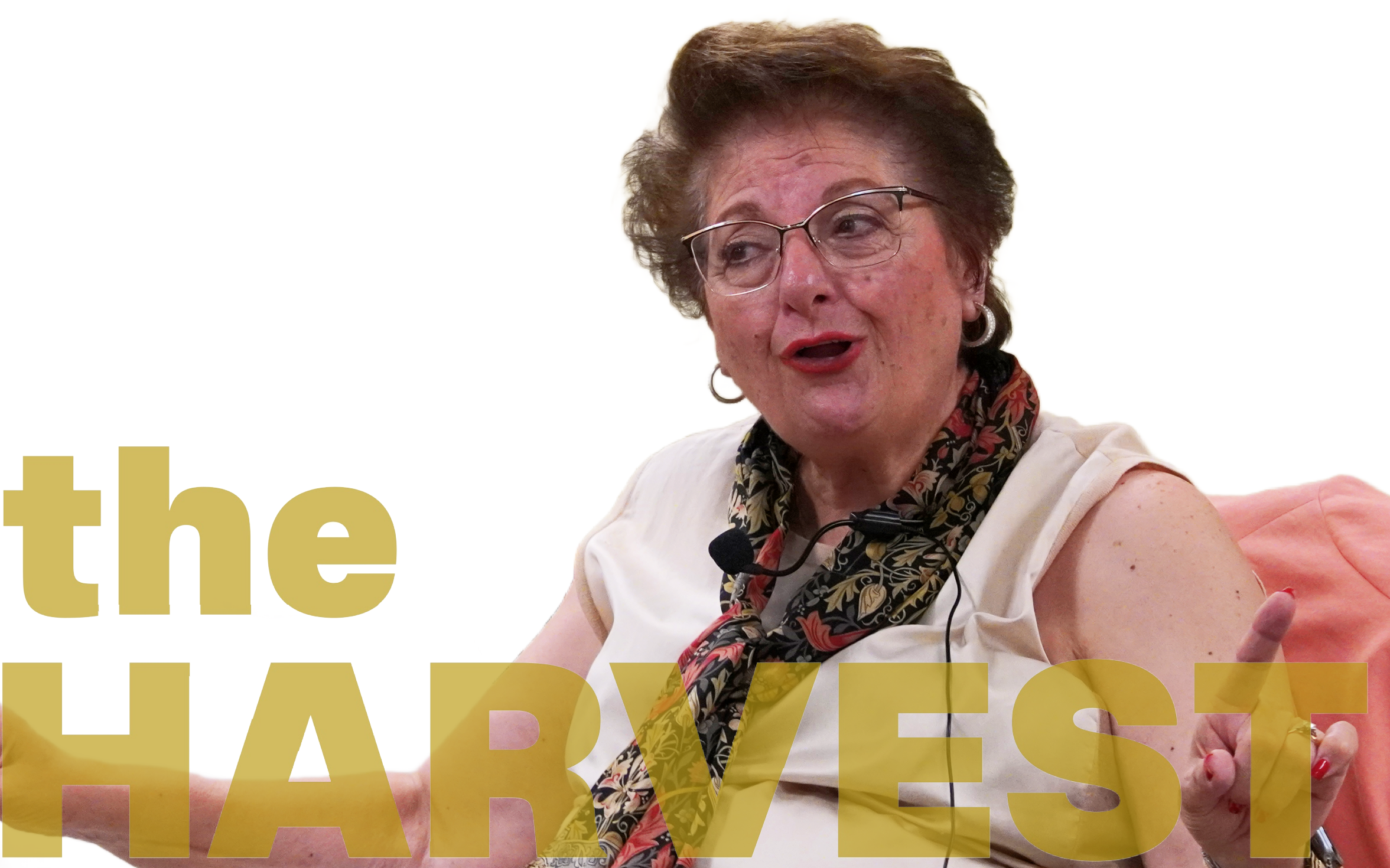


In this heartfelt episode of The Harvest podcast, recorded on August 20, 2025, Najwa delivers a passionate sermon on living a vibrant, daily Christian faith guided by the Holy Spirit. Through personal anecdotes, scriptural insights, and reflections on early Christian traditions, she inspires listeners to embrace a disciplined spiritual life rooted in prayer, fasting, and trust in God’s presence.
The episode, delivered by Najwa, is a 45-minute sermon-style talk blending personal testimony, biblical exegesis, and reflections on Christian traditions, focusing on the transformative power of the Holy Spirit and the importance of a daily walk with Jesus. It emphasizes faith as a lived experience, not just a Sunday ritual, and draws heavily on early church history, scripture, and Najwa’s experiences with prayer and fasting. Below is a concise summary organized by key themes, referring to her as Najwa where appropriate.Key Themes and Content
- The Holy Spirit and Inner Peace (0:00-10:00):
- Najwa opens by addressing the universal human longing for contentment, which she attributes to a spiritual void only filled by the Holy Spirit, the “third person of eternity.” She cites the fruits of the Spirit (love, joy, peace, patience, goodness, faithfulness, kindness, self-control) as gifts that bring Christ’s peace, surpassing understanding (Philippians 4:7).
- She encourages listeners to call on the Holy Spirit daily to overcome fear and anxiety, quoting Jesus’ repeated command, “Fear not, I am with you.” Najwa shares how she talks to Jesus constantly, placing His images around her home as reminders of His presence.
- Sola Scriptura vs. Church Tradition (10:00-20:00):
- Najwa discusses her Protestant cousins from Galilee, who adhere to sola scriptura (Bible-only doctrine), contrasting this with her traditional Christian perspective (likely Orthodox or Catholic). She argues that scripture is paramount (“the Word is God”), but early Christians relied on oral tradition and faith for 300 years before the Bible was compiled.
- She highlights the Gospels’ differences: Matthew, Mark, and Luke (synoptic, similar narratives) vs. John (revealing Jesus as the “Great I Am”). Najwa emphasizes Luke’s unique role as a doctor, iconographer, and interviewer of Mary, providing detailed accounts (e.g., Annunciation, Gabriel’s visit).
- Early Church History and Persecution (20:00-30:00):
- Najwa recounts the first 300 years of Christianity, marked by persecution (e.g., martyrdom of Stephen, James, Peter’s escape from prison). She notes that only 3% of the Roman Empire could read/write, so faith spread through oral testimony and martyrdom, not scripture alone.
- She traces the spread of Christianity from Jerusalem to Pella, Damascus, Antioch (where “Christians” were first named), and beyond (Egypt, Gaza). Najwa connects her family history (e.g., her great-grandfather, a priest in Gaza) to this legacy.
- Paul’s Conversion and Faith in Action (30:00-35:00):
- Najwa narrates Saul of Tarsus’ transformation into Paul (Acts 9), emphasizing his encounter with Jesus on the Damascus road. She underscores that persecuting Christians is persecuting Christ, as believers are “members of His body.”
- She highlights faith-driven miracles, like Paul’s escape in a basket and the early church’s resilience, tying it to the broader spread of Christianity (e.g., to Arabia, Ethiopia, North Africa via Mark and Matthew).
- The Power of Prayer and Fasting (35:00-42:00):
- Najwa shares personal stories of answered prayers through fasting, especially during the 15-day fast for the Virgin Mary (likely the Orthodox Dormition Fast, August 1-15). Examples:
- Praying for Zoe (schizophrenia) and Chris (drug addiction); Zoe’s breakthrough came on August 15, 2025, when she accepted medication after 25 years.
- Past miracles: conceiving her first child, her daughter’s engagement, and her son’s wedding venue, all tied to August 15 prayers.
- A delayed answer (August 28) for her brother, explained by a card from her nun aunt, aligning with the Orthodox calendar.
- She emphasizes Mary as the Theotokos (God-bearer, per Luke 1:26-38), whose intercession is powerful when paired with fasting.
- Najwa shares personal stories of answered prayers through fasting, especially during the 15-day fast for the Virgin Mary (likely the Orthodox Dormition Fast, August 1-15). Examples:
- Christian Life as a Discipline (42:00-45:00):
- Najwa describes Christianity as a disciplined “way of life” (Greek: oikonomia), rooted in seasons like the Annunciation (March 25) to Christmas (December 25) and Transfiguration (40 days before Crucifixion). She calls believers to live as “saints,” made holy by Christ (per Paul’s letters).
- The episode closes with a communal prayer, including the Lord’s Prayer, thanking the Holy Spirit for guiding listeners and blessing their needs.